







Best CFD Brokers in United States for 2026
Explore Article

Time to read: 14 minutes
Posted: 14 Sep 2026
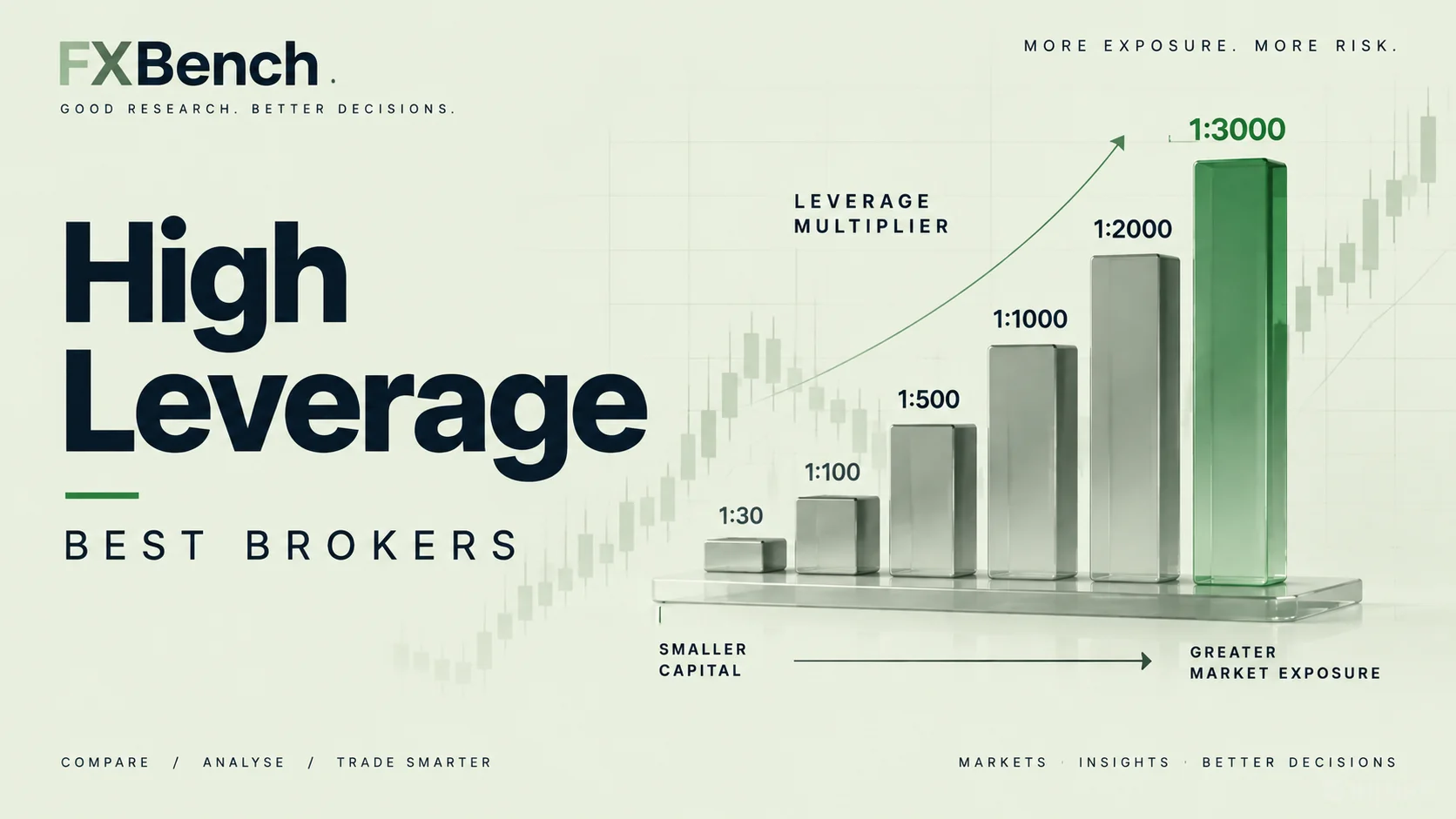
Eight CFD brokers were compared for leverage, margin requirements, trading costs, platforms, and client protections. Exness ranks best overall, Vantage stands out for the highest conditional leverage, and FXGlory stands out for low-entry 1:3000 MetaTrader trading.
Maximum leverage varies by legal entity, jurisdiction, client classification, instrument, account equity, and position size. The figures below refer to the account and entity conditions relevant to each ranking rather than a universal limit available to every client.
* Vantage’s standard account leverage generally reaches up to 1:500, while eligible clients in selected countries can access up to 1:1000. The Premium Unlimited account offers conditional leverage up to 2,000,000,000:1, mainly on eligible forex and gold CFDs. Premium Unlimited remains subject to eligibility and leverage restrictions. Leverage falls to 1:2000 when equity exceeds $5,000, 1:1000 above $30,000, and 1:500 above $100,000. Vantage can also reduce or remove Unlimited leverage around major news events, volatile market conditions, or for risk-management and regulatory reasons.
Exness takes the top position because its high-leverage structure is supported by clearer account-level safeguards than most competitors. Eligible forex and precious-metal traders gain access to its highest settings, while published equity tiers explain when available leverage decreases.
Its headline maximum is not universal across the CFD range. Stock CFDs and several indices use lower fixed-margin requirements, making Exness stronger for forex and gold rather than equally leveraged multi-asset trading.
Experienced forex and gold traders who want very high leverage without giving up clearly defined account protections.
Vantage ranks second because Premium Unlimited publishes the highest numerical leverage ceiling among these brokers. The account targets forex and gold traders, and available leverage declines as equity increases.
This structure favors smaller qualifying accounts focused on capital efficiency rather than traders seeking one high ratio across a broad CFD portfolio.
Experienced forex and gold traders whose main priority is accessing the highest available leverage on a qualifying account.
FXGlory ranks third because it combines a defined 1:3000 maximum with MT4 and MT5 rather than requiring an Unlimited-style account. The highest ratio applies to smaller balances, making the setup particularly accessible for traders using limited starting capital.
Its Standard structure also differs from most high-leverage MetaTrader competitors by using fixed spreads and no trading commission.
Small-balance MetaTrader users who specifically want 1:3000 leverage, fixed spreads, and a very low entry requirement.
Global Prime stands out for clarity rather than the largest headline number. It separates leverage by asset class, helping traders see how margin requirements differ between forex, gold, indices, and share CFDs before opening a position.
The Raw account adds a straightforward commission-based pricing structure for traders who prefer tighter quoted spreads.
Traders who value clearly published margin rules and Raw pricing more than the highest possible leverage ratio.
Axi earns its position through trading costs rather than maximum leverage. Its international offering reaches 1:1000, while the Pro account combines very low quoted spreads with a relatively modest per-lot commission.
The strongest leverage applies to forex and selected metals. Indices and share CFDs use lower ratios.
Cost-conscious MetaTrader traders who prioritize tight pricing alongside high international forex leverage.
Capitalcore combines fixed spreads with leverage up to 1:2000, distinguishing it from Raw and ECN-style competitors. This makes transaction costs easier to anticipate before entry. The highest ratios concentrate on forex and metals, while stock CFDs require substantially more margin.
Traders who prefer fixed spreads and high leverage without requiring MetaTrader.
Alpari remains a strong high-leverage choice, but its main advantage in this ranking is its Pro ECN structure rather than simply the 1:3000 headline. Traders gain access to spreads from 0.0 pips, MT4 and MT5, and a commission-based setup suited to more active strategies.
Available leverage is tied to notional exposure. As position size increases, the maximum ratio steps down, making the highest tier more relevant to smaller positions.
Active MetaTrader users who prefer ECN-style pricing and accept a commission-based cost structure.
UnitedPips offers leverage up to 1:1000 with fixed spreads and commission-free pricing. Unlike most MetaTrader-focused brokers in this ranking, it uses its own desktop and mobile trading environment.
The maximum ratio is balance-sensitive and changes under certain trading conditions, while the available market range is narrower than at broader CFD brokers.
Traders who prefer fixed spreads and a proprietary platform over the MetaTrader ecosystem.
A broker's maximum leverage is tied to the legal entity serving the account. International entities generally permit higher ratios, while tightly regulated retail jurisdictions impose lower limits and often provide stronger client protections.
Professional classification changes the equation further. Higher leverage sometimes comes with reduced regulatory safeguards, so traders should identify the exact entity and client category before comparing headline ratios.
Higher leverage reduces the margin required to open a position but also allows greater exposure relative to account equity. The most relevant safeguards are negative balance protection, margin-call rules, stop-out thresholds, and the regulatory jurisdiction responsible for the account.
These protections differ across the brokers compared. Exness provides negative balance protection under the relevant conditions, while Axi's cited international entity and Alpari do not provide the same safeguard. A lower leverage limit under a stronger protection framework therefore sometimes offers a better balance than the highest available ratio.
Do not rely on the headline maximum. Forex and gold usually receive the highest ratios, while indices and stock CFDs often require substantially more margin.
Identify the legal company opening the account and check the leverage, protections, and regulatory framework attached to that entity.
Review margin-call thresholds, stop-out levels, balance or equity tiers, and any temporary leverage reductions applied during volatile periods.
Evaluate spreads and commissions together. High leverage does not compensate for consistently expensive execution.
Match the broker to the intended trading method. MetaTrader users should consider EA support, custom indicators, order handling, and any strategy restrictions alongside leverage.
Best Overall: Exness. Its combination of high available leverage, published margin conditions, multiple platforms, and account protections creates the strongest overall proposition.
Highest Leverage: Vantage. Premium Unlimited provides the largest published numerical ceiling in the comparison, although its eligibility and equity requirements make it most appropriate for experienced traders.
Best 1:3000 MetaTrader Option: FXGlory. It combines 1:3000 maximum with MT4 and MT5, fixed spreads, and one of the lowest entry requirements among the brokers reviewed.
FXBench reviews CFD brokers using a consistent framework that covers regulatory status and legal entities, trading costs, platforms, execution conditions, account types, deposit and withdrawal methods, market coverage, customer support, research tools, and client protections. We also examine leverage and margin rules, including margin-call levels, stop-out thresholds, negative balance protection, and any restrictions linked to specific jurisdictions or client classifications.
The aim is to compare brokers on the conditions traders actually receive rather than relying on headline claims alone. See the CFD broker review methodology for the full evaluation framework and scoring process.
It depends on the broker, entity, and account conditions. Standard high-leverage structures in this comparison range from 1:1000 to 1:3000, while conditional accounts extend beyond those ratios.
FXGlory and Alpari both offer leverage up to 1:3000 with MT4 and MT5. FXGlory reduces maximum leverage as account balance rises, while Alpari uses notional-exposure tiers.
Yes. Several international entities make 1:500 available to retail clients, although regulated retail limits are lower in some major jurisdictions.
Major forex pairs and gold generally receive the highest ratios. Indices, cryptocurrencies, and stock CFDs usually operate with higher margin requirements.
Each entity follows different regulatory rules, client classifications, and risk policies, so the same broker brand often provides different leverage across jurisdictions.
No. Higher leverage lowers the margin required for a position but increases the amount of market exposure an account supports. Position sizing and account protections remain more important than the maximum ratio alone.

Arlo Fenwick regularly covers topics such as MetaTrader platforms, copy trading, risk management, leverage policies, and evolving financial regulations across major jurisdictions including the UK, Europe, Australia, and the Middle East.
In addition to broker reviews, Arlo writes educational content aimed at improving financial literacy and trading discipline. His work often emphasizes responsible trading practices, realistic expectations, and the importance of choosing regulated financial providers.
Known for an analytical yet straightforward writing style, Arlo Fenwick continues to serve as a trusted voice in the online trading and investment space, helping readers navigate an increasingly competitive financial marketplace with confidence and clarity.