


Best CFD Brokers in India for 2026
Explore Article

Time to read: 9 minutes
Posted: 16 Sep 2026
Seven brokers were compared for traders in the United States: tastyfx, Capitalcore, UnitedPips, FOREX.com, OANDA, Charles Schwab, and Interactive Brokers. tastyfx ranks best overall for U.S.-regulated leveraged forex trading, while Capitalcore ranks second for fixed-spread international CFD conditions and UnitedPips ranks third for its low entry requirement, fixed spreads, and commission-free structure.
FOREX.com provides a broad U.S. forex platform range, OANDA combines no fixed minimum deposit with flexible position sizing, and Charles Schwab and Interactive Brokers provide regulated alternatives through forex, futures, securities, and other exchange-traded markets.
The main U.S.-specific factor is product regulation. Locally regulated U.S. brokers do not offer the standard retail OTC CFD structure found in the UK. CFTC and NFA rules instead govern retail off-exchange forex, with maximum leverage of 1:50 on eligible major currency pairs and 1:20 on other forex pairs.
tastyfx, FOREX.com, OANDA, Charles Schwab, and Interactive Brokers use U.S.-regulated entities and do not offer the standard retail CFD product range available in many overseas jurisdictions. Capitalcore and UnitedPips accept U.S. clients through international account structures rather than CFTC and NFA-regulated U.S. retail forex entities.
tastyfx ranks first because its U.S. account combines CFTC and NFA oversight with multiple pricing structures and a focused forex platform range. Standard keeps trading commission-free, while Zero+ separates raw spreads from a fixed commission.
Platform choice is another differentiator. The current U.S. offering includes the proprietary tastyfx platform, TradingView, and MetaTrader 5.
tastyfx best suits U.S. traders who prioritize CFTC and NFA regulation and want a choice between commission-free forex pricing, raw-spread pricing, TradingView, and MT5.
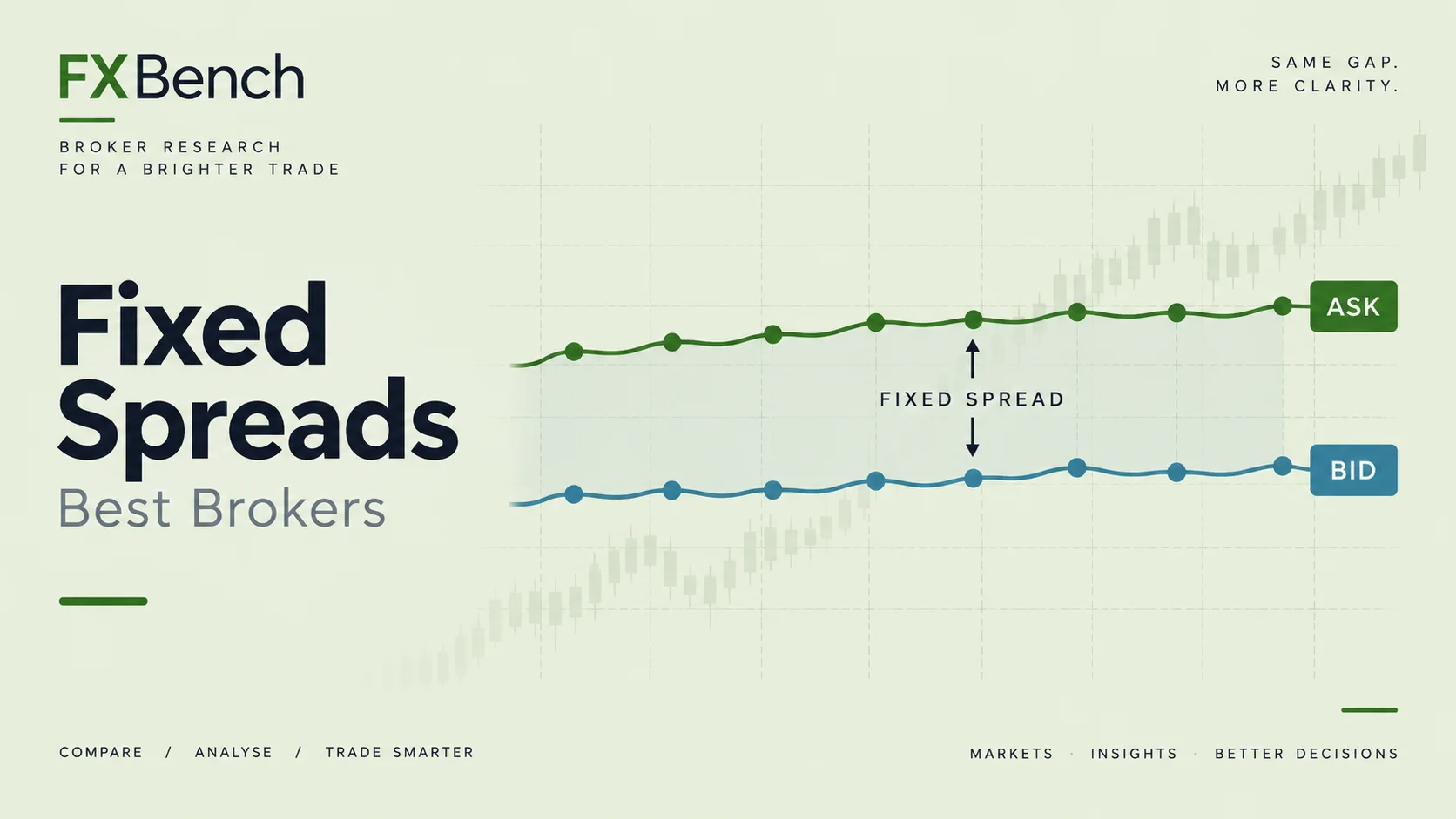
Capitalcore ranks second for its fixed-spread structure. Classic, Silver, Gold, and VIP accounts use fixed pricing, keeping quoted spreads stable rather than allowing them to widen and tighten with market liquidity.
The Classic account combines a $10 minimum deposit with fixed spreads from 0.3 pips, $0 trading commission, swap-free conditions, and leverage up to 1:2000.
Capitalcore best suits traders researching an international account with fixed spreads, commission-free pricing, swap-free conditions, and a low starting deposit.
UnitedPips ranks third for its combination of fixed spreads, $0 trading commission, swap-free conditions, and a low deposit threshold.
Its account structure centers on proprietary UniTrader platforms rather than MetaTrader or TradingView, while leverage reaches 1:1000 under its international trading conditions.
UnitedPips best suits traders researching an international account with fixed spreads, a low starting deposit, commission-free pricing, and swap-free conditions.
FOREX.com combines U.S. regulation with one of the broader platform selections among locally authorized retail forex brokers. Its proprietary web and mobile platforms sit alongside TradingView, MT4, and MT5.
Spread-Only and RAW Pricing also create two distinct cost structures. Spread-Only builds the trading cost into the spread, while RAW reduces the quoted spread and adds a fixed commission.
FOREX.com best suits U.S. forex traders who want CFTC and NFA regulation with proprietary platforms, TradingView, MT4, MT5, and a choice between spread-only and commission-based pricing.
OANDA stands out for flexible U.S. account conditions. There is no fixed minimum deposit, position sizes start from individual currency units, and traders get OANDA's proprietary platform alongside MT4 and TradingView.
Spread-only pricing requires no separate dealing commission. Traders with at least a $10,000 initial deposit or account balance also qualify for Core spreads plus commission pricing.
OANDA best suits U.S. forex traders who prioritize no fixed minimum deposit, flexible position sizing, TradingView, and API access.
Charles Schwab combines U.S.-regulated spot forex with futures, options, stocks, and ETFs through the wider Schwab ecosystem. The main advantage for active traders is thinkorswim, which provides desktop, web, and mobile trading.
Forex trading is commission-free, with the cost incorporated into the bid-ask spread. More than 65 currency pairs are available alongside exchange-traded futures covering several major asset classes.
Charles Schwab best suits U.S. traders who want spot forex and exchange-traded futures through thinkorswim rather than an international CFD platform.
Interactive Brokers provides the broadest regulated market access in this comparison, covering stocks, ETFs, options, futures, bonds, currencies, metals, and cryptocurrencies through one account ecosystem.
U.S. residents do not receive access to Interactive Brokers' CFD products. The U.S. offering instead centers on spot currencies, exchange-traded products, and securities.
Interactive Brokers best suits experienced U.S. traders who prioritize broad regulated market access and professional trading tools over a dedicated retail CFD platform.
The United States does not use the same retail OTC CFD framework as the United Kingdom. Locally regulated leveraged retail forex activity falls primarily under the Commodity Futures Trading Commission and the National Futures Association.
Firms acting as counterparties to U.S. retail off-exchange forex transactions require the applicable CFTC registration and NFA membership. Securities trading also falls under SEC and FINRA rules, while exchange-traded futures operate under the CFTC-regulated futures framework.
Retail CFDs are therefore not provided through the standard locally regulated U.S. retail brokerage framework used by tastyfx, FOREX.com, OANDA, Charles Schwab, and Interactive Brokers.
A foreign broker accepting U.S. clients is different from holding the CFTC and NFA registrations required for locally regulated U.S. retail forex activity.
U.S. retail protections depend on the product being traded rather than one CFD rulebook. CFTC and NFA rules impose registration, capital, disclosure, reporting, margin, and risk-management requirements on regulated retail forex and futures firms.
U.S. retail forex rules restrict leverage and require sufficient margin to maintain open positions. The U.S. framework does not provide the same universal negative balance protection used for retail CFD accounts in the UK and European Union.
Protection also differs by product. Securities accounts fall under SEC, FINRA, and applicable SIPC protections, while forex and futures positions use separate regulatory and customer-fund frameworks.
A 1:50 leverage limit corresponds to a 2% minimum margin requirement, while 1:20 corresponds to a 5% margin requirement. Individual regulated brokers also set higher margin requirements for specific currency pairs.
Some international brokers state that they accept U.S. clients, but client acceptance and U.S. regulatory authorization are separate matters. Firms providing covered retail off-exchange forex services to U.S. customers fall under CFTC registration requirements.
A locally regulated U.S. retail forex account is held with an entity carrying the required CFTC registration and NFA membership. U.S. margin, disclosure, reporting, and complaint procedures apply.
An internationally regulated account is held with a financial-services company supervised outside the United States. A foreign license does not replace U.S. authorization where CFTC registration requirements apply.
An offshore account is held with an overseas company operating under its home-jurisdiction registration or regulatory structure. Leverage, client-money rules, account protections, and complaint procedures follow that entity rather than the U.S. retail forex framework.
U.S. traders should therefore distinguish between a broker accepting residents of the United States and the broker holding U.S. authorization for the leveraged product being offered.
Confirm which company holds the account and whether it has the CFTC and NFA registrations required for the product being offered. Do not assume an overseas license applies to a U.S. account.
Compare spreads, commissions, overnight financing, futures fees, and non-trading charges. Raw or commission-based forex pricing should be assessed using the combined spread and commission.
U.S. traders should identify which locally available product provides the required exposure. Spot forex covers currency markets, while exchange-traded futures provide leveraged exposure to currencies, indices, commodities, rates, metals, and cryptocurrencies.
MT5 supports established automated forex workflows, TradingView focuses on chart-based trading, thinkorswim combines forex and futures tools, and Trader Workstation focuses on broad multi-asset market access.
Check CFTC and NFA status, margin rules, customer-fund treatment, liquidation policies, complaint procedures, and whether the specific product receives securities or futures account protections.
U.S.-regulated brokers commonly support ACH, bank wire, and debit-card funding, depending on the provider. Compare minimum transaction amounts, processing times, withdrawal methods, and account-name requirements.
Best Overall: tastyfx. Its U.S.-regulated entity, no fixed Standard account minimum, Standard and Zero+ pricing, and TradingView and MT5 support provide the strongest overall fit for locally regulated forex trading.
Best for Fixed Spreads: Capitalcore. Its Classic account combines fixed pricing, $0 commission, swap-free conditions, and a $10 minimum deposit.
Best for Low-Entry Fixed Spreads: UnitedPips. Fixed spreads, commission-free trading, swap-free accounts, and a low deposit threshold distinguish its international offering.
The best choice depends primarily on local authorization, trading costs, required market exposure, platform needs, and whether spot forex, futures, securities, or international CFD terms fit the intended trading style.
Our rankings follow our independent CFD Broker Review Methodology, which explains how brokers are assessed and compared.
tastyfx Standard starts from 0.8 pips with $0 commission, while Zero+ starts from 0.0 pips with a $5 per-lot commission. Interactive Brokers quotes spot currency spreads as narrow as 0.1 pips and applies a separate volume-based commission. Capitalcore spreads start from 0.3 pips on the VIP account, and UnitedPips spreads start at 0.7 pips on VIP account.
The United States does not use the same locally regulated retail CFD structure found in the UK. tastyfx ranks best overall in this comparison for locally regulated leveraged forex because it combines CFTC and NFA oversight with Standard and Zero+ pricing, TradingView, and MT5.
The Commodity Futures Trading Commission regulates U.S. retail off-exchange forex and derivatives activity, while the National Futures Association acts as the industry's self-regulatory organization. Securities products also fall under SEC and FINRA oversight.
Capitalcore offers the highest leverage of the brokers covered with a maximum of 1:2000.

Arlo Fenwick regularly covers topics such as MetaTrader platforms, copy trading, risk management, leverage policies, and evolving financial regulations across major jurisdictions including the UK, Europe, Australia, and the Middle East.
In addition to broker reviews, Arlo writes educational content aimed at improving financial literacy and trading discipline. His work often emphasizes responsible trading practices, realistic expectations, and the importance of choosing regulated financial providers.
Known for an analytical yet straightforward writing style, Arlo Fenwick continues to serve as a trusted voice in the online trading and investment space, helping readers navigate an increasingly competitive financial marketplace with confidence and clarity.